Introduction
The digital age has witnessed the evolution of several computing devices, each promising portability, functionality, and user-friendly interfaces. Amidst this technological innovation, the desktop PC (Personal Computer) has remained a consistent force in the computing world, catering to both personal and professional needs. This article delves into the world of desktop PCs, tracing their history, advantages, and future prospects.
A Brief History of the Desktop PC
The Early Beginnings: The 1970s marked the dawn of personal computers with machines like the Apple I and IBM’s 5100 series. Initially, PCs were a privilege of tech enthusiasts and businesses.
The 90s Boom: Fast forward to the 1990s, Microsoft Windows operating systems and Intel processors emerged, leading to a massive proliferation of PCs in homes and offices worldwide.
21st Century Innovations: The 2000s saw the rise of sleek designs, more powerful processors, and an emphasis on graphics, accommodating the needs of gamers, graphic designers, and multimedia professionals.
Advantages of Desktop PCs
1. Power & Performance: Desktop PCs have always been at the forefront in terms of raw power. Their capacity for larger components and cooling systems means they can handle more demanding tasks compared to laptops.
2. Customizability: Desktop PCs stand out for their ease of customization. Whether it’s upgrading a graphics card, adding RAM, or introducing additional storage, desktops offer flexibility.
3. Cost-Effectiveness: In general, desktop PCs provide more bang for your buck. They often come at a lower price point than high-end laptops but offer comparable or even superior performance.
4. Durability & Longevity: With proper maintenance, desktop PCs can outlive most portable devices. Their stationary nature ensures less physical wear and tear.
Current Trends in Desktop Computing
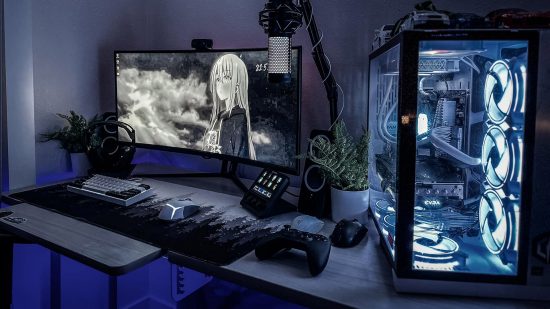
Gaming Rigs: The gaming community has propelled the demand for high-performance desktop PCs. With games demanding top-tier graphics and smooth gameplay, gaming rigs equipped with the best processors, graphics cards, and cooling systems are in high demand.
All-In-One (AIO) PCs: Combining the monitor and the CPU into a single unit, AIOs offer a neat solution for those who want a desktop experience without the clutter. Popularized by Apple’s iMac, many other brands now offer AIO solutions.
Virtual Reality (VR) & Augmented Reality (AR): As VR and AR technologies grow, there’s a rising demand for PCs that can handle these resource-intensive tasks.
The Future of Desktop PCs
While some argue that the world is shifting towards portable solutions like laptops, tablets, and smartphones, the desktop PC is far from extinct. Here’s what the future might hold:
1. Cloud Computing: As cloud services become more prevalent, desktop PCs could serve as primary access points, harnessing the power of cloud resources.
2. Sustainability: The modular nature of desktops could lead to more sustainable computing practices, where individual components are replaced rather than entire systems.
3. Advanced Interfaces: The integration of AI, AR, and VR might transform the traditional desktop experience, offering more interactive and immersive user experiences.
Conclusion
The desktop PC, a stalwart of the digital age, has been through a journey of constant evolution. Its adaptability, power, and versatility make it a mainstay in the computing world. Whether for gaming, professional work, or general use, desktop PCs continue to hold their ground in a rapidly changing tech landscape. While the form and function may evolve, the essence of the desktop PC is here to stay.