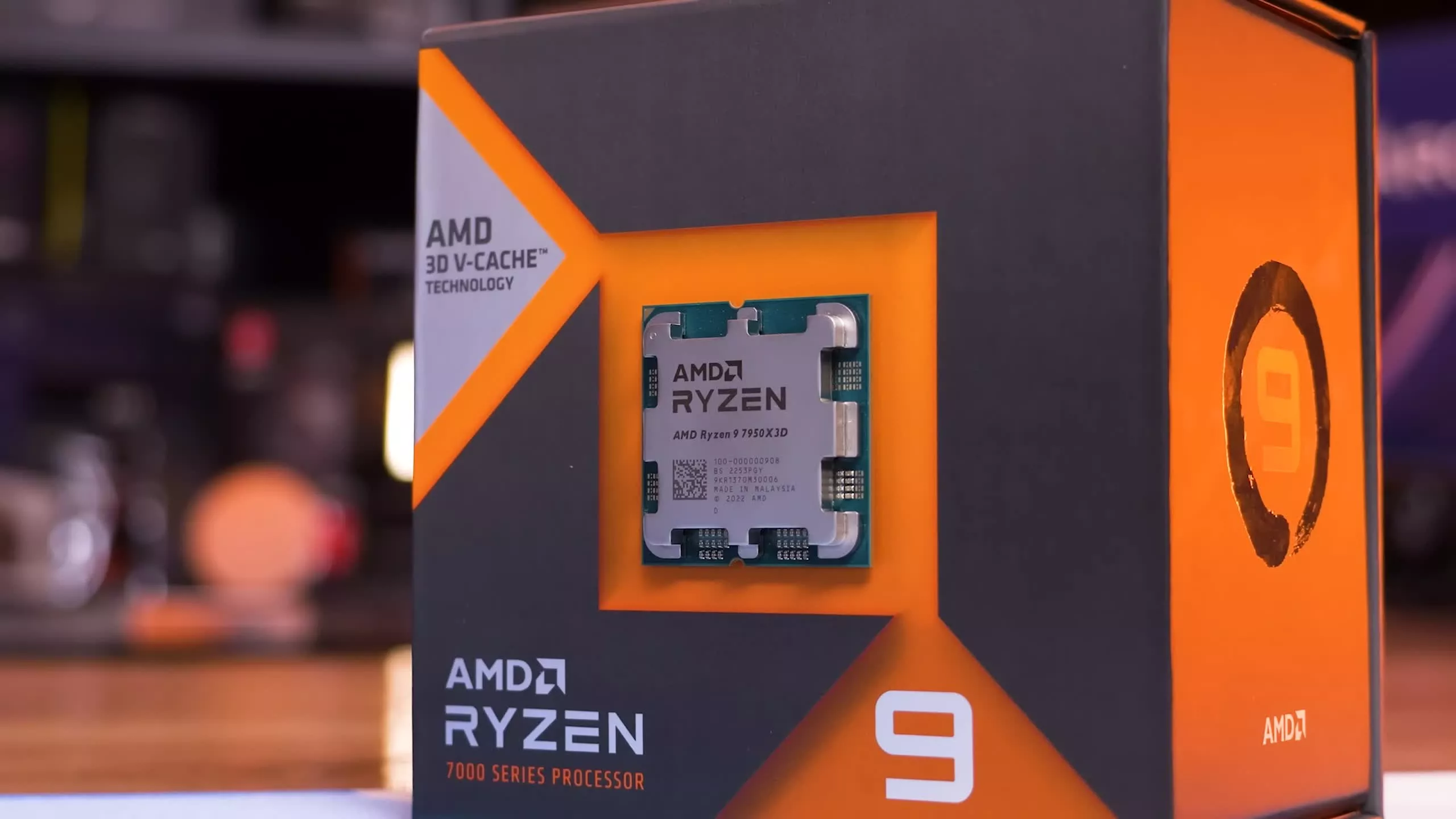
The AMD Ryzen 9 7950X3D has been a topic of much discussion in the tech community. As the successor to the 7800X3D, which was hailed as the ideal gaming CPU, the 7950X3D promises to be the perfect blend of gaming and work performance. But does it live up to the hype? Let’s delve into the details.
1. Design and Specifications
The 7950X3D boasts 16 cores and 32 threads, with a boost clock of up to 5.7 GHz from its base clock of 4.2 GHz. It operates on the AM5 socket and has a rated TDP of 121 watts. One of the standout features is the 3D V-cache, which promises to enhance gaming performance significantly. However, not both CCDs have this additional L3 cache, leading to performance disparities between the cores.
2. Power Consumption and Cooling
In terms of power consumption, the 7950X3D is notably efficient. During a Cinebench multi-core loop, the total package consumption was recorded at 143 watts, a significant reduction from its predecessor. This efficiency translates to easier cooling. While the previous model reached temperatures of 95°C in Cinebench, the 7950X3D maintained a comfortable 84°C on the die.
3. Performance Metrics
In single-core Cinebench tests, the 7950X3D emerged as the top performer, even outpacing its non-3D counterpart. However, in multi-core tests, it lagged slightly behind. This trend was observed across various benchmarks, including CPU-Z and 3DMark. In rendering and encoding workloads, the 7950X3D consistently produced slightly lower numbers than the regular variant.
4. Gaming Performance
The 3D V-cache truly shines in gaming benchmarks. In games like Dota 2, Rainbow Six Siege, Far Cry 6, and Shadow of the Tomb Raider, the 7950X3D dominated its non-3D counterpart, showing significant FPS gains. However, in CS:GO, the 7950X3D lagged behind, indicating that not all games benefit equally from the 3D V-cache.
5. Software Dependency
One of the significant concerns with the 7950X3D is its software dependency. To optimize gaming performance, users need to have the Xbox game bar installed and enabled, along with Windows gaming mode. Additionally, the latest AMD chipset drivers are essential. While AMD provides guides to navigate this, the software dependency can be a point of contention for many users.
Conclusion
The AMD Ryzen 9 7950X3D positions itself as the ideal hybrid CPU, excelling in both gaming and work-related tasks. While it does come with a higher price tag, its performance metrics justify the cost. The only real drawback is the software dependency, which might deter some users. However, for those looking for a CPU that can handle both gaming and work with aplomb, the 7950X3D is a worthy contender.