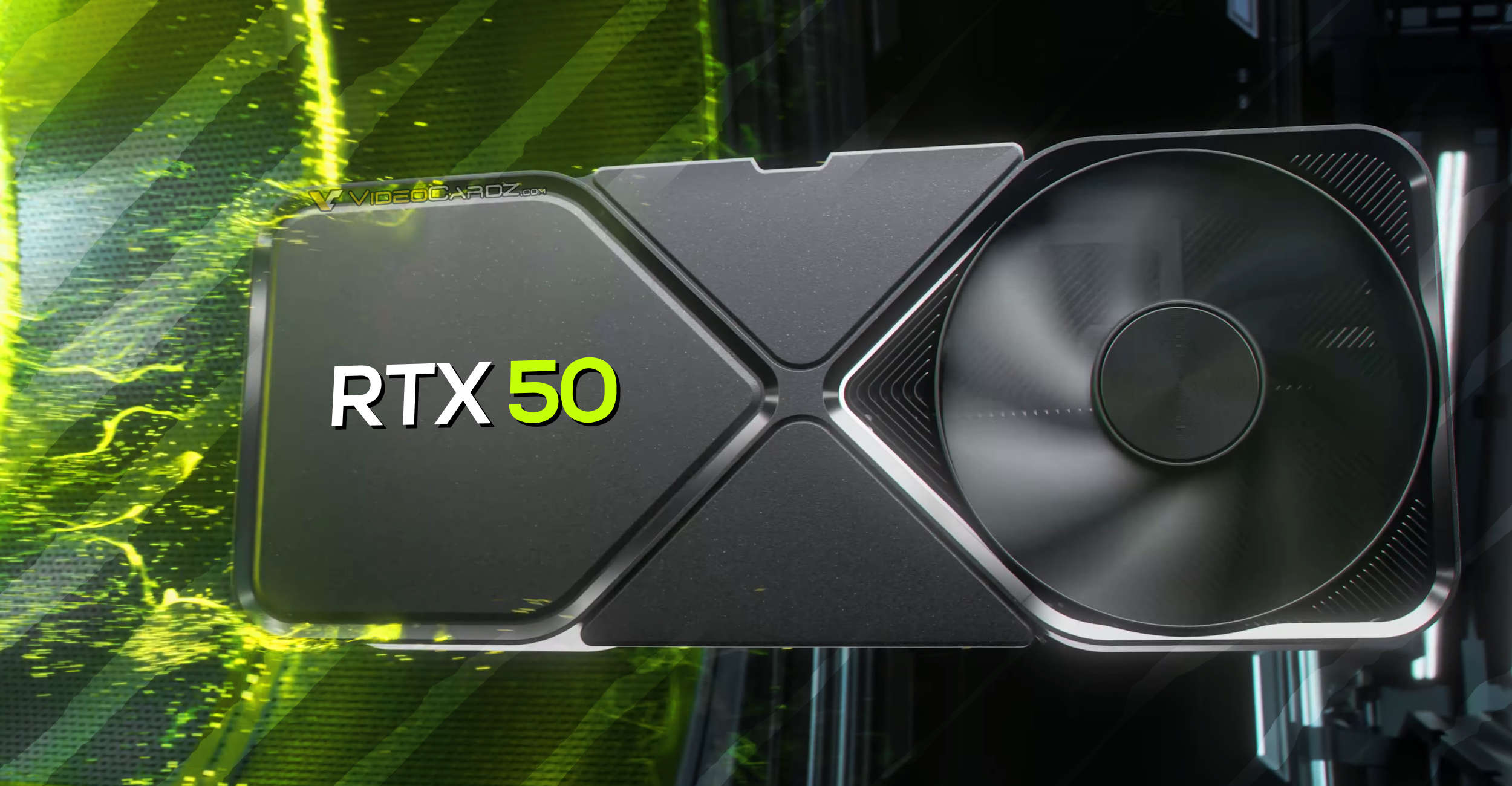
NVIDIA to Launch RTX 50 Series GPUs at CES 2025
NVIDIA is set to reveal its next-generation GPUs—the RTX 5090, 5080, and 5070—at CES in January 2025, according to sources from WCCFTech. The RTX 5090 will reportedly come with a 600-watt power rating and a massive 32 GB of VRAM, showcasing NVIDIA’s commitment to high-performance graphics. However, the RTX 5080 and 5070 may feature fewer cores and VRAM, with the 5070 expected to have only 12 GB, which is seen as minimal for modern 4K gaming. Although NVIDIA argues that larger GPU caches can compensate for limited VRAM, some users are skeptical about these specifications, considering past criticism of lower memory capacities.
NVIDIA’s approach with GPU cache prioritization over VRAM signals a shift in how the company is optimizing graphics processing for memory efficiency. With high expectations surrounding the RTX 50 Series, CES 2025 will be a critical moment for NVIDIA to prove its design choices align with user demands.
Intel’s Aero Lake CPUs: Power Efficiency at the Forefront
Intel’s Aero Lake series, also known as the Intel Core Ultra 200-series, promises to deliver similar gaming performance to its predecessors but with approximately half the power consumption. This aligns with Intel’s focus on efficiency rather than drastic performance gains, a strategy that could potentially reduce heat output and improve power management in desktops. Early performance benchmarks indicate that the flagship Core i9 Ultra 285K may lag behind AMD’s Ryzen 9 7950X3D in raw power, but Aero Lake’s cost and efficiency advantages may appeal to users who prioritize sustainability and energy savings.
Despite not being the most powerful option on the market, Aero Lake’s emphasis on energy efficiency positions it as a viable choice for consumers who value performance-per-watt over outright speed. By focusing on efficiency, Intel aims to stay competitive in an industry where AMD and Apple are leading with high-performance chips.
Tesla Introduces RoboTaxi Prototype with Minimalist Design
Tesla has unveiled its new RoboTaxi, a two-seater autonomous vehicle with no steering wheel or pedals, relying entirely on Tesla’s Full Self-Driving (FSD) technology. Dubbed the “CyberCab,” this car is expected to cost $30,000 and may launch within the next two years. The minimalist design focuses on efficiency, offering a compact solution for urban transportation. However, the RoboTaxi’s limited seating capacity and heavy reliance on FSD have raised questions about its functionality and appeal, particularly given the ongoing controversies surrounding Tesla’s self-driving technology.
The CyberCab will utilize inductive charging and feature automated cleaning robots, enhancing its autonomy for city use. While this vehicle represents a leap forward in Tesla’s vision for autonomous transport, public adoption may hinge on further advancements and regulatory approvals for FSD systems.
Optimus Robots: Tesla’s Multifunctional AI-Powered Helpers
In addition to the CyberCab, Tesla showcased its Optimus robot lineup, which the company envisions as AI-powered household and service assistants. CEO Elon Musk compared Optimus to “R2-D2 or C-3PO but better,” suggesting they could handle diverse tasks from teaching to childcare. However, the presentation did not clarify whether the robots were operating autonomously or controlled remotely, leaving some skeptical of the demonstration’s authenticity.
Tesla’s bold claims for Optimus highlight the company’s ambition to dominate the domestic robotics market. If successful, these robots could redefine home automation and personal assistance, though substantial advancements in AI capabilities and ethical considerations will be necessary to make this vision a reality.
AI Companies Unite to Combat Non-Consensual Deepfakes and Harmful Content
Major tech companies, including Microsoft, OpenAI, and Anthropic, have agreed to collaborate on efforts to combat non-consensual deepfakes and child abuse material. Concurrently, Meta, Snapchat, and TikTok have formed a coalition to address the spread of self-harm content on their platforms. These alliances mark a significant shift toward social responsibility, with companies aiming to create safer digital spaces by sharing data on harmful content across platforms.
By pooling resources, these companies hope to curb the impact of malicious content more effectively. This collaboration underscores a growing industry trend towards using AI and inter-platform cooperation to address complex social issues, illustrating the tech industry’s evolving role in online safety.
Brain-Implanted Nano Discs: The Future of Non-Invasive Treatments?
Researchers are exploring the potential of brain-implanted nano discs to treat neurological conditions like Parkinson’s and epilepsy. These nano discs, which could be activated by an external electromagnet, present a less invasive alternative to deep brain stimulation (DBS), an established but risky treatment. This innovative approach represents a new frontier in medical technology, with the possibility of treating conditions without the need for extensive surgical procedures.
If successful, nano-disc technology could revolutionize the treatment of neurological disorders, offering patients a safer, less invasive solution. However, this technology is still in the experimental stage, with further research needed to ensure its efficacy and safety in medical applications.