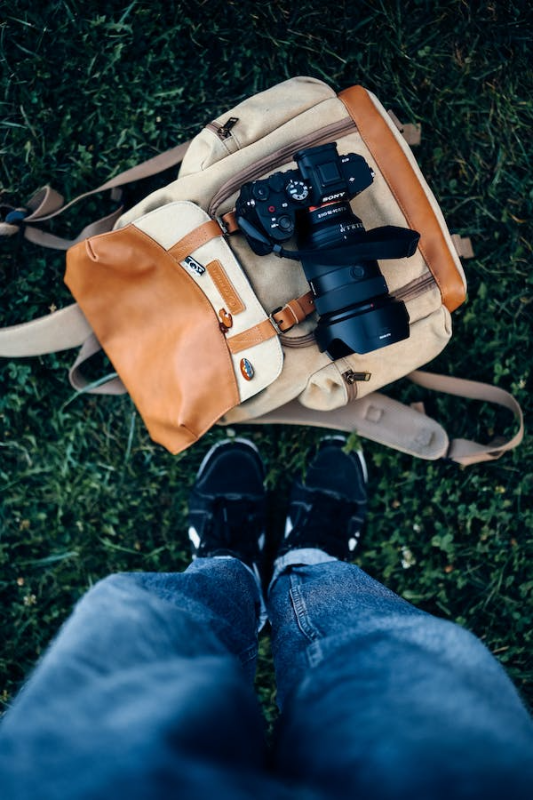
The world of photography is expansive and offers boundless opportunities to capture the essence of moments, places, and emotions. Whether you’re a budding photographer looking to improve your skills or someone who just wants to take better vacation snaps, these photography tips will serve as your guide.
1. Understand the Basics of Composition
- Rule of Thirds: Imagine your frame divided into nine equal segments by two vertical and two horizontal lines. Position your subject along these lines or at the intersections for a more balanced, naturally engaging photo.
- Leading Lines: Use natural or man-made lines to lead the viewer’s eye towards your main subject or a vanishing point in the image.
- Framing: Use natural frames like windows, doors, or trees to encase your main subject, emphasizing its importance.
2. Master Your Camera Settings
- ISO: This controls your camera’s sensitivity to light. A lower ISO (e.g., 100 or 200) is ideal for brighter conditions to avoid graininess. Increase the ISO in low-light conditions, but be wary of potential noise.
- Aperture (f-stop): This controls the depth of field. A smaller f-number (e.g., f/2.8) results in a shallower depth of field, blurring the background, while a larger f-number (e.g., f/16) keeps more in focus.
- Shutter Speed: This determines how long your camera’s sensor is exposed to light. Faster speeds (like 1/1000) freeze action, while slower speeds (like 1/30) can introduce motion blur.
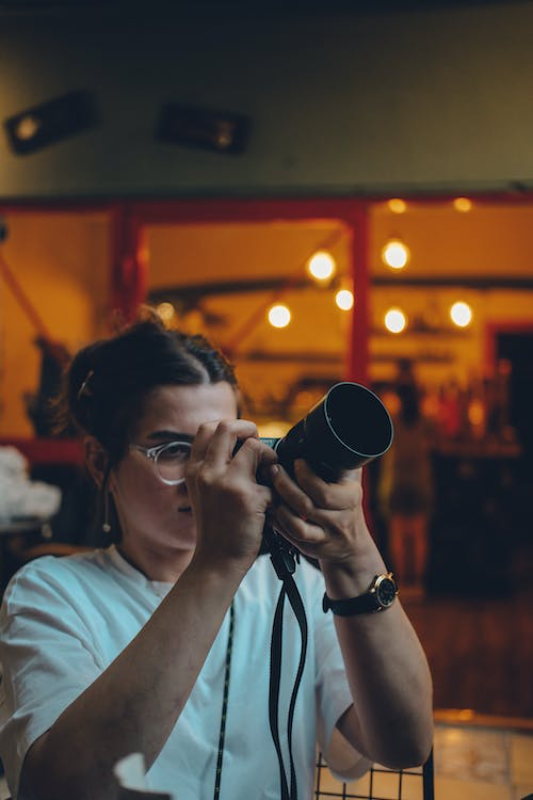
3. Experiment with Different Perspectives
Break the monotony by shooting from various angles:
- Low Angle: Shooting from a lower vantage point can make your subject appear grand or imposing.
- High Angle: Taking a shot from above can make subjects seem smaller or give an overview of a scene.
- Bird’s-eye View: This can be achieved using drones, providing a unique perspective from the sky.

4. Embrace Natural Lighting
- Golden Hour: This period shortly after sunrise and before sunset offers soft, golden-toned light, ideal for capturing warm, ethereal images.
- Blue Hour: The time just before sunrise and after sunset, where the sky has a deep blue hue, is perfect for cityscapes and landscapes.
- Overcast Conditions: Cloudy skies can act as a natural diffuser, providing even lighting that’s great for portraits.
5. Pay Attention to Details
While it’s essential to have a clear subject, the background and tiny details can either make or break a photograph. Ensure the background isn’t too cluttered or distracting. Focus on textures, patterns, and colors to add depth and interest to your photos.
6. Invest in Post-Processing
Photography doesn’t end after pressing the shutter button:
- Editing Software: Tools like Adobe Lightroom or Photoshop can help enhance colors, crop images, correct imperfections, and bring out details.
- Filters & Presets: These can provide a consistent look to your photos, especially if you’re curating images for a platform like Instagram.
7. Keep an Eye on the Horizon
For landscapes, ensure the horizon is straight. A tilted horizon can be disorienting. Place the horizon according to the rule of thirds: either in the top third or bottom third of the frame, unless you have a specific reason to center it.
8. Practice with Different Genres
Don’t limit yourself. Try various photography genres like macro, portrait, street, or wildlife. This will help you adapt, learn new techniques, and discover your passion.
9. Invest in Good Equipment
While it’s true that the photographer makes the photo, not the camera, having the right equipment can help:
- Lenses: Different lenses, like wide-angle or telephoto, can drastically change the outcome of your shots.
- Tripods: Essential for long exposures or landscapes, they ensure stability.
- External Flash & Reflectors: For controlled lighting, especially in portrait photography.
10. Always Keep Learning
Photography is an ever-evolving field. Attend workshops, read books, join online courses, and always be curious.
In conclusion, photography is as much about technical skills as it is about the art of observation and creativity. With these tips in mind, you’re well on your way to capturing compelling images that resonate. Remember, every photographer has their unique style; keep shooting and let yours shine through!